Milwaukee’s relationship with Lake Michigan has changed dramatically over the past 150 years. What was once an industrial waterfront — lined with factories, rail yards, and shipping terminals — has been transformed into one of the most beautiful urban lakefronts in America.
Then: Industry on the Water
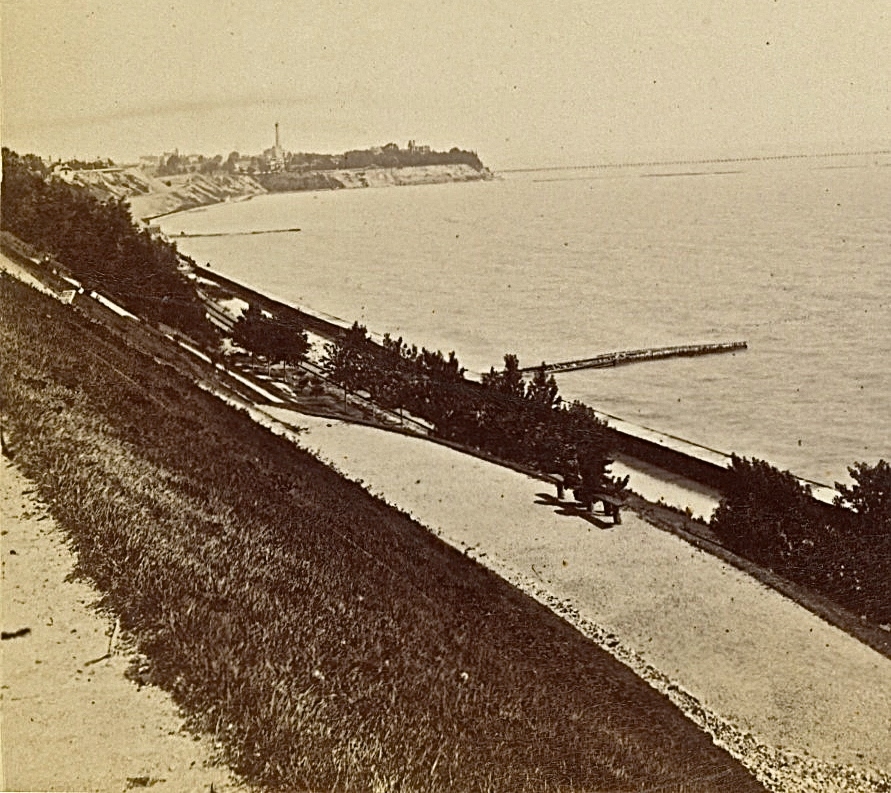
In the late 19th and early 20th centuries, Milwaukee’s lakefront was all business. The harbor was one of the busiest on the Great Lakes, handling grain, lumber, coal, and manufactured goods. Factories and warehouses crowded the shoreline. The lake was a resource to be exploited, not a park to be enjoyed.
Pollution was severe. Industrial waste flowed directly into the lake. The water near the harbor was so contaminated that swimming was unthinkable. Milwaukee’s working class lived in the shadow of the factories, breathing the air and drinking the water that industry had fouled.
The Turn Toward the Lake
The transformation began in the early 20th century, when civic leaders began to envision a lakefront that belonged to all Milwaukeeans. Frederick Law Olmsted, the legendary landscape architect who designed Central Park, created a vision for Milwaukee’s lakefront parks that shaped development for generations.
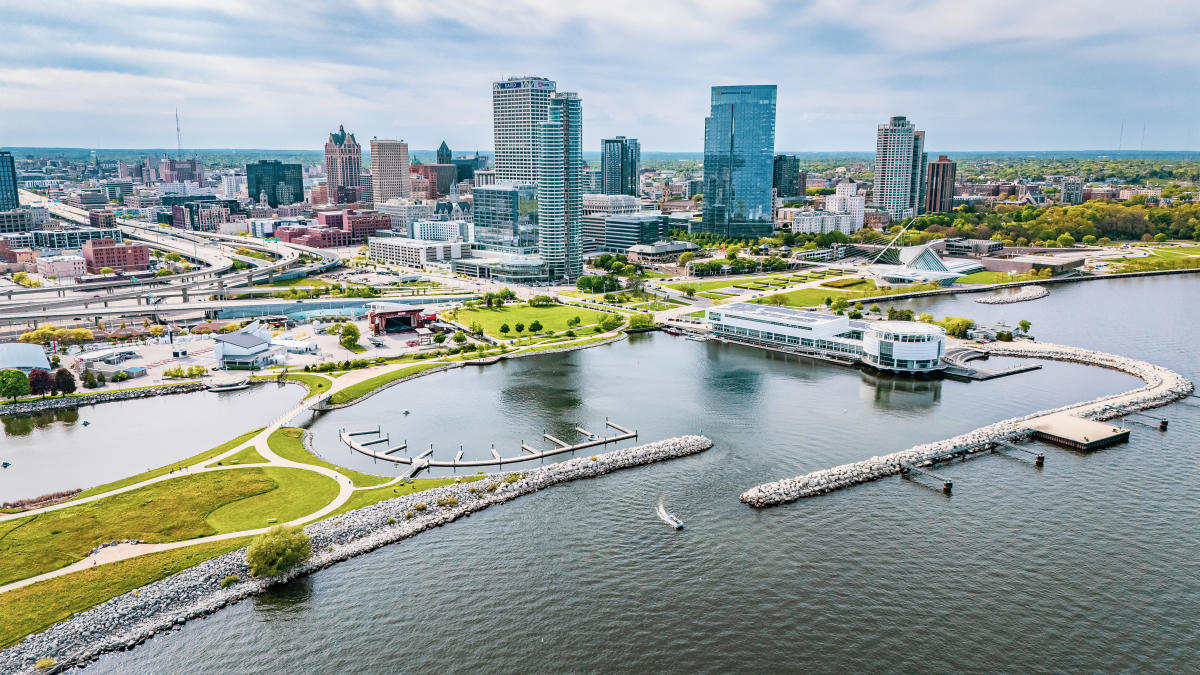
Over the decades, industry was pushed back from the shoreline. Lincoln Memorial Drive was built. Veterans Park was created. The Milwaukee Art Museum opened on the lakefront. Summerfest found its home there. Piece by piece, Milwaukee reclaimed its greatest natural asset.

Now: A Jewel of the Midwest
Today, Milwaukee’s lakefront is a 10-mile stretch of parks, beaches, marinas, and cultural institutions that is the envy of cities across the country. Bradford Beach draws thousands of swimmers and volleyball players every summer. The Oak Leaf Trail connects the lakefront to the rest of Milwaukee’s park system. And on a clear day, you can stand on the shore and see nothing but blue water stretching to the horizon — a reminder of why Milwaukee exists where it does.