America’s Black Holocaust Museum: One of Milwaukee’s Most Powerful Places Everyone Should Visit
Address: 401 W. North Avenue, Milwaukee, WI 53212
Neighborhood: Historic Bronzeville
Website: https://www.abhmuseum.org
When people think about things to do in Milwaukee, they usually mention the lakefront, breweries, Summerfest, the Harley-Davidson Museum, or our incredible food scene.
But if you ask me what I believe is one of the most important places in the entire city—not just for visitors, but for lifelong Milwaukee residents—the answer is America’s Black Holocaust Museum.
This isn’t the type of museum you walk through just to look at artifacts before heading to lunch.
This is the kind of place that changes how you see history, Milwaukee, and America itself.
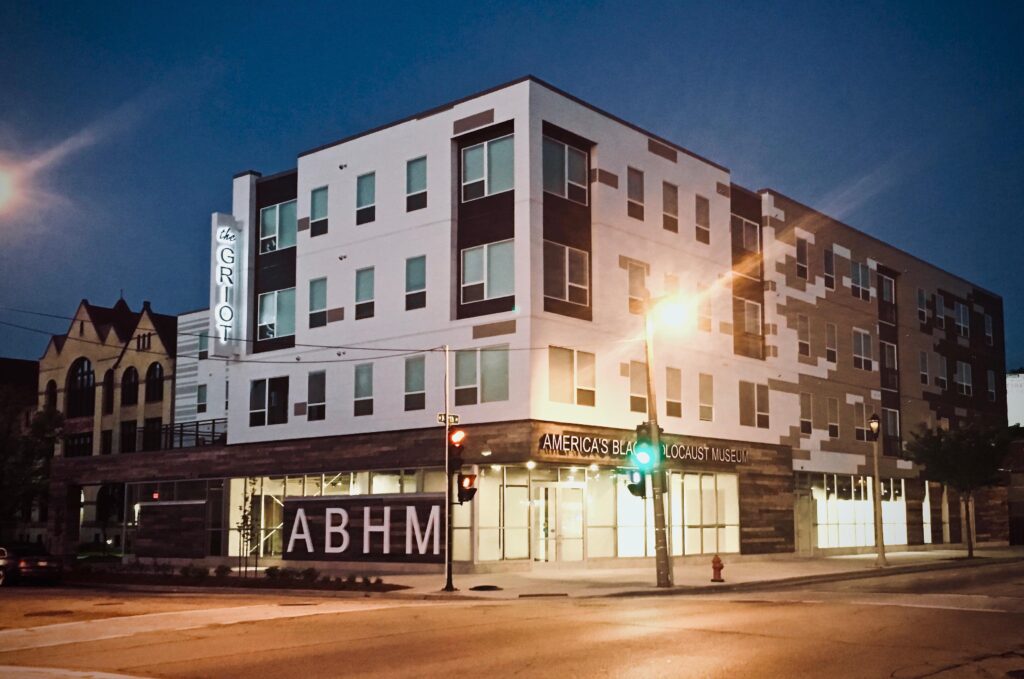
Located in the heart of Milwaukee’s historic Bronzeville neighborhood at 401 W. North Avenue, America’s Black Holocaust Museum (often called ABHM) tells one of the most complete, emotional, and honest stories of the African American experience you’ll find anywhere in the country.
It doesn’t simply tell you what happened.
It explains why it happened, how it happened, who fought against it, and why understanding this history still matters today.
Whether you’re Black, White, Latino, Asian, Native American, young, old, religious, or not, everyone leaves this museum with a greater understanding of American history.
And honestly…
That’s exactly what museums are supposed to do.
A Museum Unlike Any Other
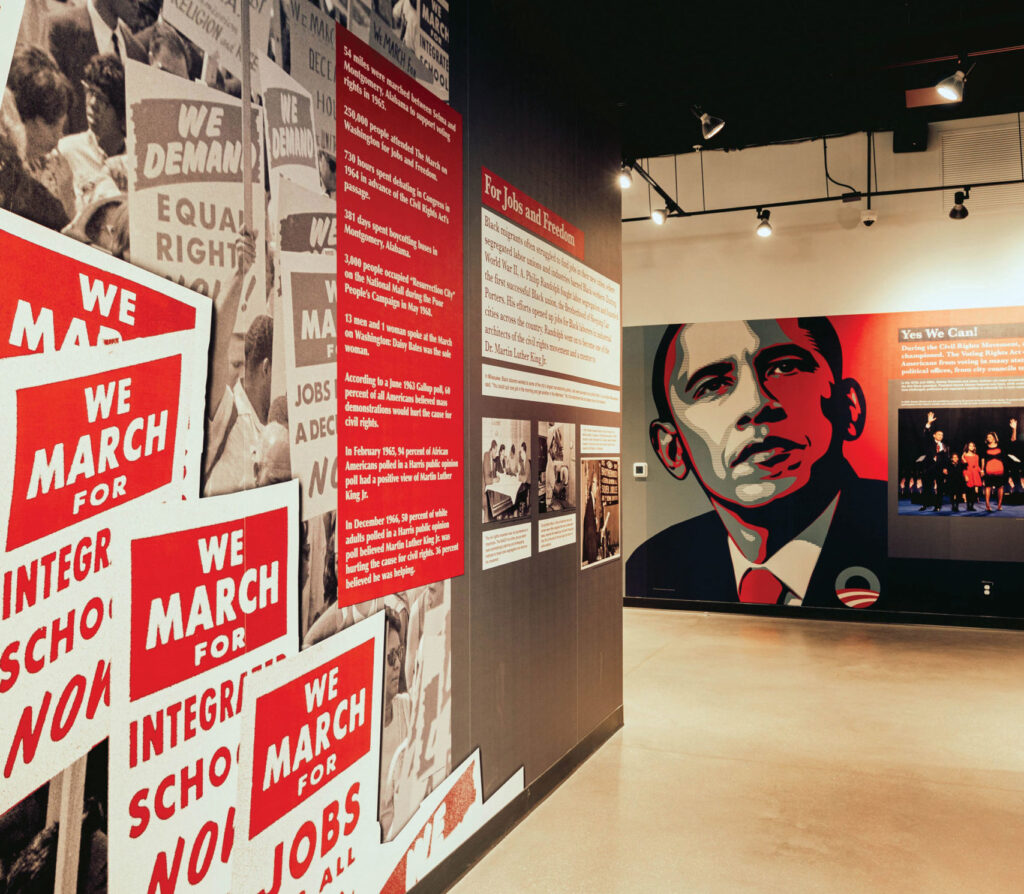
America’s Black Holocaust Museum isn’t focused on one historical event.
Instead, it walks visitors through nearly 500 years of African American history—from thriving African civilizations before slavery to present-day conversations about racial justice, equality, education, and opportunity.
What makes this museum different is that it never treats Black history as something that only happened during one month of the year.
Instead, it presents African American history as American history.
As you move through the galleries, you begin to understand that every chapter connects to the next.
Slavery.
Reconstruction.
Jim Crow.
The Great Migration.
Civil Rights.
Mass incarceration.
Economic inequality.
Voting rights.
Housing discrimination.
The exhibits show that none of these events happened in isolation.
They’re all connected.
And that’s one of the museum’s greatest strengths.
The Meaning Behind the Name
Some people are surprised by the museum’s name.
Why “Black Holocaust”?
Founder Dr. James Cameron intentionally used the word “Holocaust” to describe centuries of systematic violence, slavery, racial terror, lynchings, segregation, and discrimination endured by Africans and African Americans.
The museum explains that the Black Holocaust wasn’t one single event.
It was a centuries-long system of oppression that affected millions of people across generations.
The name encourages visitors to think deeply about the scale of suffering while also recognizing extraordinary survival, resistance, and hope.
The Incredible Story of Dr. James Cameron
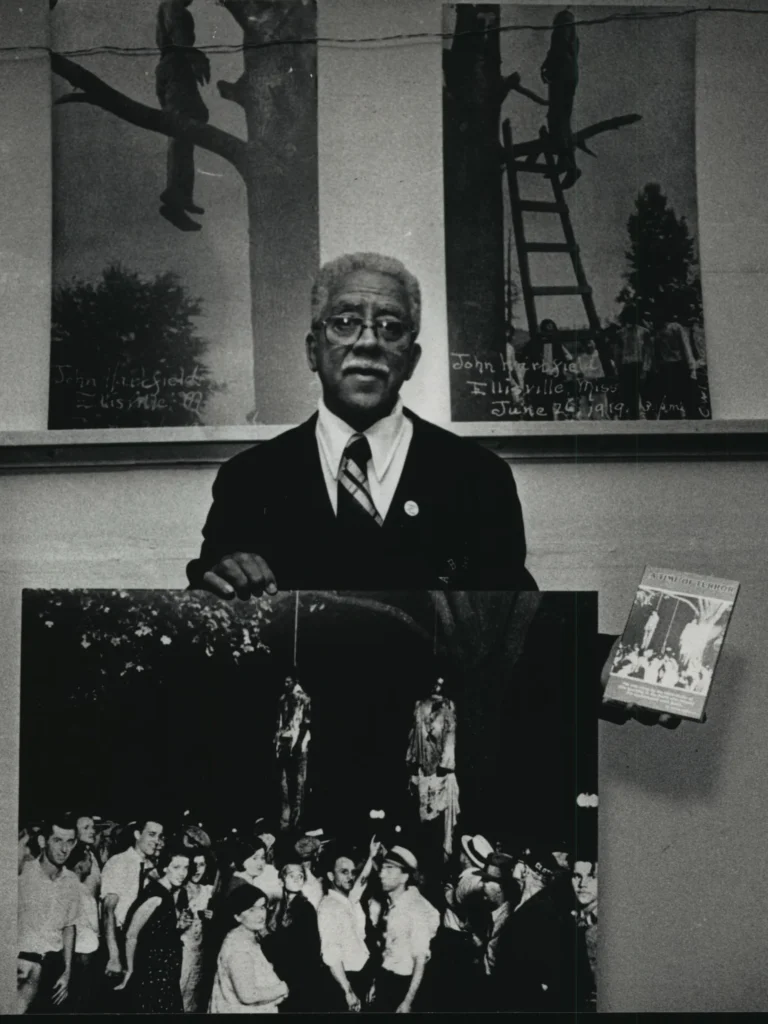
If there’s one person every visitor should learn about before entering the museum, it’s Dr. James Cameron.
His life story is almost impossible to believe.
In 1930, sixteen-year-old James Cameron was arrested in Marion, Indiana, along with two friends after an accusation involving the death of a white man during a robbery.
An angry mob stormed the jail.
Thousands gathered.
The three teenagers were dragged into the street.
Two of Cameron’s friends were brutally lynched before the crowd.
James Cameron believed he would be next.
With a rope already around his neck, someone in the crowd reportedly shouted that he had nothing to do with the murder.
For reasons no one can fully explain, the mob stopped.
His life was spared.
He became one of the only known survivors of an attempted public lynching in American history.
Imagine living through something like that.
Many people would have spent the rest of their lives hiding from the memory.
James Cameron did the opposite.
He dedicated his life to educating others so history would never be forgotten.
Years later, after moving to Milwaukee, he spent decades collecting photographs, books, newspaper articles, personal stories, and historical artifacts documenting Black history.
His life’s work eventually became America’s Black Holocaust Museum.
Today, every visitor benefits from his courage.
Without James Cameron, many of these stories may never have been preserved.
Walking Through the Museum

Although the museum isn’t enormous in size, don’t let that fool you.
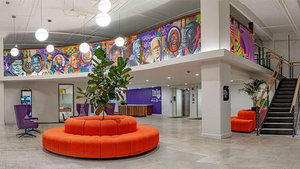
Every room is filled with information that invites you to slow down.
Many visitors spend one to three hours exploring the exhibits.
Some spend even longer.
The galleries are arranged chronologically, making it easy to understand how history unfolded.
Among the major themes you’ll encounter are:
African Life Before Enslavement
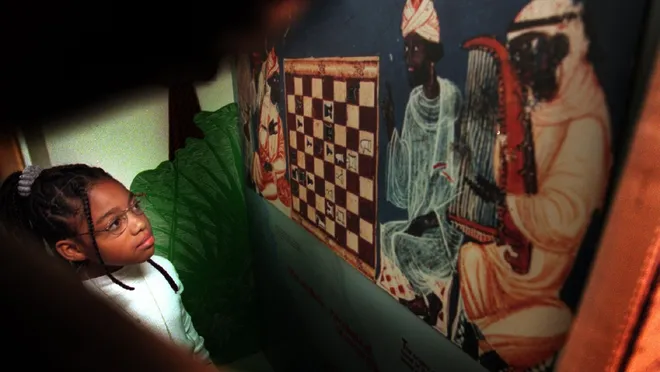
The museum begins by challenging one of history’s biggest misconceptions—that Africa had no civilizations before slavery.
Visitors learn about thriving kingdoms, trade routes, education, architecture, agriculture, and cultures that existed long before European colonization.
This opening section reminds visitors that Africans were not born into slavery.
They had rich histories long before being captured.
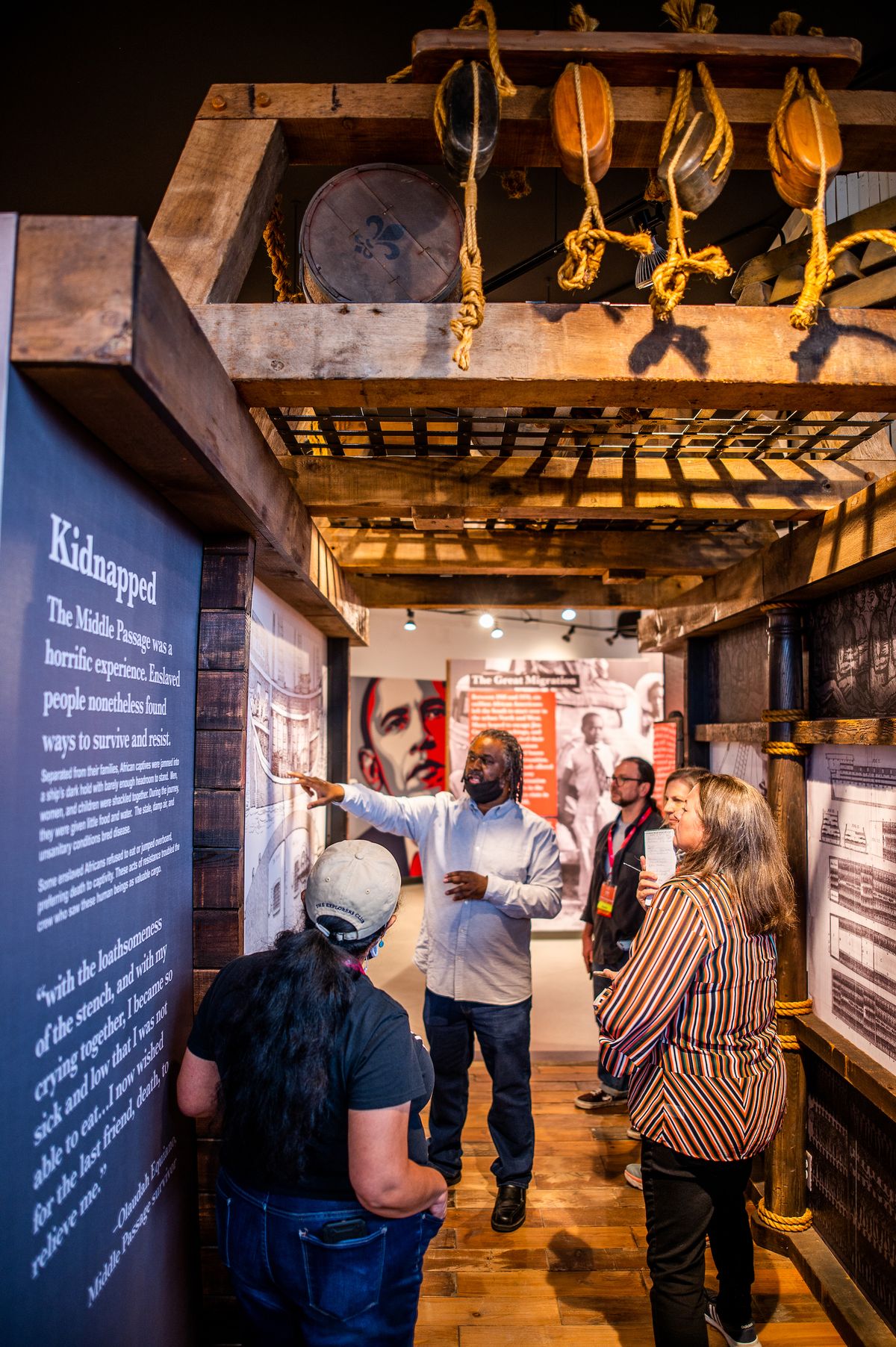
The Middle Passage
Few exhibits are more emotionally difficult than those describing the transatlantic slave trade.
Visitors learn how millions of Africans were kidnapped, transported across the Atlantic under horrific conditions, and sold into slavery throughout the Americas.
Personal accounts, historical documents, and visual displays make the statistics deeply human.
Slavery in America
The museum explores how slavery shaped the growth of the United States economically, politically, and socially.
You’ll learn about family separation, forced labor, resistance, rebellions, and everyday acts of courage that rarely receive enough attention in history books.
Reconstruction
Many Americans know slavery ended in 1865.
Far fewer understand what happened afterward.
The museum explains Reconstruction—a brief period when African Americans gained political power, opened businesses, voted, and held public office before many of those gains were violently reversed.
It’s one of the museum’s most eye-opening sections.
Jim Crow America
This gallery examines segregation, racial violence, discriminatory laws, and the rise of white supremacist terror following Reconstruction.
Visitors learn how Black Americans were denied equal education, housing, employment, and voting rights for generations.
One particularly moving section examines the history of lynching and racial terror.
Rather than sensationalizing violence, the museum focuses on the human stories behind these tragedies.
The Civil Rights Movement
Here visitors encounter familiar names like Dr. Martin Luther King Jr., Rosa Parks, Malcolm X, Medgar Evers, Fannie Lou Hamer, and countless lesser-known activists whose bravery transformed America.
The exhibits highlight ordinary people who made extraordinary sacrifices.
Modern America
The final galleries encourage visitors to think about issues still affecting communities today.
Topics include:
- Housing inequality
- Criminal justice
- Education
- Economic disparities
- Voting rights
- Community activism
- Hope and reconciliation
Rather than telling visitors what to believe, the museum encourages thoughtful reflection.
Why This Museum Matters to Milwaukee
Milwaukee consistently ranks among America’s most segregated metropolitan areas.
Many people know that statistic.
Far fewer understand why.
America’s Black Holocaust Museum provides historical context that helps explain many of today’s social and economic disparities.
Understanding Milwaukee means understanding Bronzeville.
Understanding Bronzeville means understanding Black history.
The museum connects national events to local experiences in ways that make history feel personal rather than distant.
The Bronzeville Neighborhood
The museum’s location is meaningful.
Historic Bronzeville once served as one of Milwaukee’s most vibrant Black business and cultural districts.
Musicians.
Doctors.
Entrepreneurs.
Churches.
Restaurants.
Community organizations.
Families built lives here despite enormous obstacles.
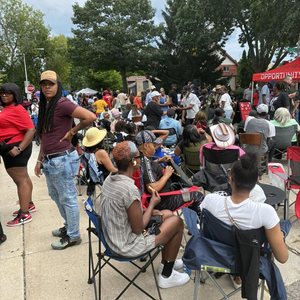
Today, Bronzeville continues its revitalization while honoring its rich history.
After visiting the museum, take time to walk the neighborhood and appreciate the murals, local businesses, and public art celebrating Black culture.
An Experience for Families
Some people wonder if children should visit.
Absolutely.
Parents may choose how much detail is appropriate depending on age, but this museum provides an opportunity for meaningful conversations about fairness, courage, empathy, and history.
Teachers regularly bring school groups because the exhibits encourage thoughtful learning rather than memorization.
Visitor Information
Address
America’s Black Holocaust Museum
401 W. North Avenue
Milwaukee, Wisconsin 53212
Regular Hours
Tuesday – Thursday: 10:00 a.m. – 5:00 p.m.
Friday – Saturday: 10:00 a.m. – 3:00 p.m.
Sunday: Closed
Monday: Closed
Admission
Adults (18+): $7
Children (Ages 3–17): $5
Children under 3: Free
Guided group tours are also available with advance reservations for larger groups.
Parking is available on nearby streets surrounding the museum.
Because hours and special events occasionally change, it’s always a good idea to check the museum’s website before visiting.
Tips Before You Visit
• Give yourself at least two hours.
• Read the exhibit panels carefully instead of rushing through.
• Bring older children or teenagers who enjoy history.
• Consider visiting nearby Bronzeville businesses before or after your tour.
• Be prepared emotionally. Some exhibits are difficult but incredibly important.